B Morgan – Our Polluted Rivers : Why is raw sewage discharged regularly into our rivers, and what are the consequences? – Mar 2026
Upon privatisation in 1989, government granted the new water companies enormous free assets in the form of land and reservoirs. It did so, on certain conditions.
The main one was that they would continually invest in increasing the size and efficiency of sewage treatment works in line with population growth. All of them failed to do this. Instead, they treated the business as an unending “cash, loan and bonus cow”. This has even been the case as, progressively, they have admitted major foreign investors from Canada, China, Australia and the Far East who have become, in many cases, the controlling owners.
The result has been that the companies, and our health conditions, are now under foreign control.
The companies have installed virtually no increase in wet weather storage or treatment capacity at their sewage works for well over twenty years, and they have been allowed by our government to operate, financially and practically, with no fair balance between company profits and service to the public. Worse still, now that the financial mismanagement of the industry is being revealed, the companies expect government and the public to bail them out!
In May 2016, in an attempt to bring order to the situation, government allowed the companies to purchase permits (licenses) to release untreated sewage into our rivers. Government did this, it claimed, in order to prevent the backflow of untreated sewage into people’s homes, an event that has a far lower occurrence than is claimed. And not only did government make this barely forgivable concession, it allowed the companies to pollute by paying for a license using money that we, the public, were supplying from our annual water bills! Worse still, the permit system even allows them to choose to pollute more, rather than invest in new treatment capacity, by buying a licence and again using the public’s money!
Yet the alternative, the provision of low-cost storage tanks with chlorine treatment that is well-aerated before discharge to remove the chlorine without harmful consequence on rivers, or to pasteurise the discharge using solar energy (as happens in India), would cost less than many of the fines that are imposed for exceeding the licence’s limits.
What is the consequence of this licensed pollution to river life?
The pathogenic bacteria from raw sewage can make some fish ill, and some strains of Escherichia coli (E coli) and Salmonella bacteria have been found to cause infection in fish.
Also, increased discharge levels of poorly or untreated sewage into rivers means the sewage decomposes in the river and, at times, causes the mass mortality of fish because the process of decomposition consumes all the oxygen that is dissolved in the water, and fish need that oxygen in order to breathe. Even “treated sewage” can have the same depleting effect on dissolved oxygen levels, especially if the treatment is incomplete or poor, but when sewage is untreated the effect is significantly worse.
In addition, discharges of poorly and untreated sewage has a detrimental effect on the nutrient load in the river’s water, and results in growths of “sewage fungus” on the river bed – really colonies of bacteria, such as Sphaerotilus natans, rather than actual fungi. Both of these effects – nutrient load and sewage fungus – cause a general disruption of normal ecological processes. Excessive phosphate loads, in particular, in river water lead to clouds of algae that form mats on the riverbed, and the underside of these algal mats harbours biofilms – long-lived colonies of different, often pathogenic, bacteria and other microbes that co-exist together, with the biofilm colony as a whole protected by an outer coating. Harmful bacteria breed in these biofilms, and some of these bacteria exchange genesgene A string of the DNA (deoxyribonucleic acid) molecule that is the fundamental unit of inheritance, so it is variations in the make up of this molecule in the gene that controls variations in an organism's appearance and behaviour. Genes are found in the nucleus of the organism's cells. between one another, and can also emit harmful toxins.
Antibiotic resistance and multidrug resistance.
By around 1990 antibiotic resistance to individual antibiotics had become well developed, restricting those that we could use and, also, slightly increasing the pathogenicity (harmfulness) of the diseases. Then, as more and more antibiotics have been deployed, bacteria have become resistant to more than one antibiotic, ending up with some bacterial diseases being resistant to many antibiotics, known as multidrug resistance.
With this has come a large catalogue of other problems. For example, as bacteria have evolved they have developed increased capabilities to ensure they can more readily attach themselves to the cells they want to invade, and a whole series of these new capabilities or “virulence factors” have developed. Also, bacteria in biofilms are able to receive genes from other bacteria in the biofilm by means of horizontal transfer, and this ability even extends to acquiring genes from different species of bacteria. Thus, inside a biofilm, bacteria that have developed a particular form of resistance to antibiotics are able to transfer it to other bacteria, including bacteria of a different type (species), by means of genegene A string of the DNA (deoxyribonucleic acid) molecule that is the fundamental unit of inheritance, so it is variations in the make up of this molecule in the gene that controls variations in an organism's appearance and behaviour. Genes are found in the nucleus of the organism's cells. transfer. In short, antibiotic resistance can very easily spread.
As a result, pathogenic bacteria have begun to become even more infectious, leading to higher mortalities in hospitals. One of the more recent developments in the virulence factors associated with biofilms is the capacity of biofilms to create thicker outer coatings to protect themselves. In hospitals especially, this has led to difficulties in treating certain illnesses and to an overloading of hospital intensive care units (ICUs). Virulence factors have also led to increased infectivity and harmfulness of these bacteria, and thus even more deaths.
The key lesson here is: If full sewage treatment had been used, multidrug resistance would have taken years longer to develop, and tens of thousands of lives could have been saved in the UK alone. Therefore, we must install full sewage treatment now.
The Importing of new diseases from abroad.
New disease bacteria have started to come in from abroad, notably two highly lethal ones. These are Klebsiella which spreads via contact with faeces and causes pneumonia and infections of the bloodstream, and Acinetobacter which spreads by person to person contact, causing pneumonia, urinary and bloodstream infections, and has become very resistant to treatment by antibiotics. Both diseases were relatively harmless, but due to repeated exposure to antibiotics they have developed multidrug resistance, and are now among the most dangerous disease bacteria in the UK. Klebsiella and Actinobacter are top of the World Health Organisation’s 2024 list of Priority Pathogenspathogens A virus, bacterium or parasite which causes disease is a pathogen. Disease causing pathogens live in the environment, and both humans and animals are hosts to them. Pathogenic viruses, bacteria and parasites are present in sewage, originating from humans and animals, and thus it is essential that sewage is given proper treatment in order to disable (kill) these pathogens before the end-products of sewage treatment (solids and water effluent) are returned to the environment., and they have begun to overload our ICUs. We have now, also, the import of new pathogenic and multi-antibiotic resistant forms of E Coli, notably E Coli 0157. These harmful forms of E Coli are resistant to the carbapenem group of antibiotics that treat carbapenemase infections, and they are appearing regionally in UK.
Thus, as the use of antibiotics has developed into multidrug resistance, what started out at the time of water industry’s privatisation in the early 1980s as a world populated by, largely, antibiotic resistance to single strains of a particular bacteria, has been transformed into a world where these single species now have literally thousands of subspecies, and their genetics is becoming highly complicated. As result, the dependability of antibiotics as a means of treatment in modern medicine is becoming increasingly precarious.
Transmission of sewage bacteria from rivers into our communities.
There are several different means by which these bacteria are transmitted. For example, they can be passed on by seagulls forced inland for food, by wild animals and, of course, by humans between themselves. However, the most efficient way is by wind borne bio-aerosols. Our river surfaces are vast, and if you watch a river closely, you will see fairly continuous minute bubbles coming to the surface. These bubbles carry tiny bits of sediment and there are always bacteria bound to this sediment. Very few of these bacteria are needed to carry infections as they are highly contagious. This method is the subject of scientific papers, and I have personally checked and confirmed it from bacteria in bio-aerosols collected at river surface level and some miles away, using my home laboratory facilities. Also in town, on shop and bus handles and everywhere I sampled. I have even linked this aerolisation of sewage related bacterial to the cause of infections in local hospitals. Note: these bacteria can also be aerosolised at sewage treatment works.
To repeat: If all sewage were properly treated, this aerolisation of pathogenic from rivers would not occur.
I include below a table of levels of deaths from these bacteria in recent years, all compiled from government sources. I have also, elsewhere, set all of this data on graphs, and the diseases all tally with and follow sewage spill data.
I am totally convinced that these escalating deaths are caused by bacteria from the untreated sewage in our rivers.
Key Points.
● Raw sewage is being discharged into our rivers, not only with the consent of government, but also by the purchase of consents by the water companies from the Environment Agency, a government body. [Note: a ‘consent’ is a permit and, in this case, permits to discharge treated and untreated sewage into a river.]
● These consents have become necessary because of the lack of sewage treatment capacity which, in turn, is due to many years of under-investment by water companies in their sewage works, in breach of agreements with government and an absence of enforcement action by government.
● The official reason for permitting the consented discharges of untreated sewage, namely, the backup of sewage in the sewers causing them to overflow in houses and onto the streets, is largely exaggerated and could be countered by creating extra basic storage space at the sewage works.
● The live bacteria present in these discharges, both in treated discharges and, at far greater levels, in untreated sewage are being transmitted into our communities and hospitals, and are causing multiple and escalating deaths.
● These bacteria lodge safely in biofilms on algal blooms, and also on plants stems and on sediments where they are able to breed and accept extra antibiotic resistant genes even from unrelated species.
● The increase in these genes helps increase the virulence factors in bacteria, thereby greatly increasing the dangers to us.
Table: The types of sewage-borne bacteria, the location of where people are infected, the number of recorded cases annually, and the % of infections that prove fatal.
Sources: Government data.
| Bacterium | Year | % acquired in Hospital | % acquired in the Community | Cases annually | Deaths annually | % of cases that are fatal |
|---|---|---|---|---|---|---|
| Enterococcus faecium | 2022-23 | 58% | 42% | 15,421 | 2,128 | 13.8% |
| MSSA | Jan-Mar 2025 | 40 | 60 | 6,150 | 1,346 av. | 21.9% |
| MRSA | Jan-Mar 2025 | 20 | 80 | 787 | 174 | 17.5% |
| Klebsiella pneumoniae | 2021-22 | 31 | 69 | 11,409 | 2,162 | 19.5% |
| Acinetobacter baumannii | 2024-25 | 95 | 5 | 1,740 | 571 | 17.5% |
| Pseudomonas aeruginosa | 2022-23 | 41 | 59 | 4,409 | 1,100 | 25.6% |
| Enterobacter E. coli | 2022-23 | 19.4 | 80.6 | 42,224 | 6,087 | 15.9% |
| Total | 82,140 approx. | 13,568 approx. | ||||
| Connected diseases | Year | % acquired in Hospital | % acquired in the Community | Cases annually | Deaths annually | % of cases that are fatal |
| Clostridiodes difficile | 2022-23 | 61% | 39% | 17,900 | 2,131 | 13.8% |
| Sepsis | 2023-24 | 49 | 51 | 245,000 approx. | 48,000 approx. | 20% av. |
| Total | 262,900 approx. | 50,131 approx. | ||||
| Total: Primary bacteria and connected diseases | 345,040 approx. | 63,699 approx. |
I am personally convinced that this data exposes unintentional corporate manslaughter through wrongful priorities, along with government complicity through the sale of permits to pollute.
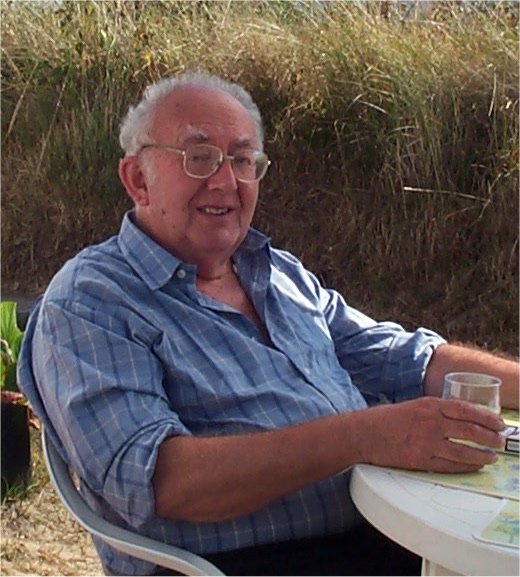
Written by Brian Morgan, retired environmental waters chemist.
My first publication, which was on using urea to measure sewage profiles in rivers and at sea, was in 1967. At home I have my own mini laboratory where I can identify bacteria by standard agar plate and stain methods. I have been assembling local air and river data in England quietly for many years.
A major publication on these matters is in preparation.
———————————
We started off with antibiotic resistance that, due to the actions of man, has led to a lack of antibiotics and increasingly limited treatments. Then, antibiotic resistance developed into multidrug resistance, leading to the increased pathogenicity [harmfulness] and virulence of disease, and the transmissibility of these changes between diseases. Then reinforced biofilms emerged along with their resistance to disinfectants, making treatment in hospitals more difficult by the day.
Now we also face a large-scale import of new disease varieties from across the world. The mortalities of all these diseases are age-related, affecting young children, but even more lethal to the elderly. The new varieties from abroad include the especially troublesome E Coli carbapenemase resistant ST131 and ST140 varieties [ST = sequence type of E coli], arriving in the UK some ten or more years ago via international travel
On top of all this, the spread of pathogenic bacteria can lead, especially in immuno-compromised people, to highly fatal sepsis and an even higher rate of mortality, all exacerbated by the dumping of raw sewage in our rivers.
The lesson and imperative for us is simple: we must build larger sewage works so that we can stop dumping raw sewage into our rivers and seas. If we do not, the complexity of diseases and mortality rates will continue to worsen until, at some point, our antibiotic armoury fails. Then, serious trouble will follow.